
Summertime Saga
Play Summertime Saga
Summertime Saga Screenshots









Summertime Saga review
Explore gameplay mechanics, character routes, and features of this popular visual novel
Summertime Saga stands as one of the most successful adult-oriented dating simulation games in the industry, consistently ranking as Patreon’s top-supported game. This visual novel places you in the role of a young man navigating college life while uncovering mysteries surrounding his father’s death and managing relationships with over 65 unique characters. Unlike linear adventure games, Summertime Saga offers an open-world experience where you control your own story progression, complete character-driven quests, and develop meaningful relationships. Whether you’re interested in understanding the game’s mechanics, exploring available character routes, or learning about its development, this guide covers everything you need to know about this expansive interactive experience.
Understanding Summertime Saga: Core Gameplay and Story
Ever found yourself scrolling through endless game stores, tired of the same old shooters and strategy titles, craving something with a bit more… personality? 😏 Something that feels less like a task list and more like stepping into another life? That’s exactly the itch Summertime Saga was made to scratch. It’s not just another game; it’s a sprawling, humorous, and surprisingly heartfelt adventure that masterfully blends the narrative depth of a visual novel with the freedom of an open-world dating simulation.
At its core, Summertime Saga is a beloved adult dating sim game that has captivated millions. But to label it just that is to sell it short. Imagine a cocktail mixed with a coming-of-age story, a mystery thriller, a life simulator, and a healthy dose of cheeky humor. 🍹 You play as a typical high school senior whose world is turned upside down after his father’s sudden passing, leaving behind a mountain of debt to some very unsavory characters. Your mission? Unravel the mystery surrounding his death, clear the family name, navigate the social jungle of high school and college, and maybe—just maybe—find love (or a few fun distractions) along the way.
### What is Summertime Saga and How Does It Work?
So, how does this all work in practice? Let me paint you a picture from my own first playthrough. I booted up the game expecting a linear sequence of pretty pictures and dialogue choices. What I got was a vibrant, living map of a whole town waiting to be explored. That’s the first magic trick of Summertime Saga gameplay: it presents itself as a visual novel but plays like a light role-playing adventure.
You control a young man from a top-down perspective, walking him around over 30 unique locations—from your cozy home and the bustling downtown to the prestigious Erikson College and the mysterious beach pier. The core loop is brilliantly simple yet deeply engaging. Each in-game day, you have a pool of energy and time. You choose how to spend it. Will you get a part-time job to earn crucial cash? 💰 Hit the library to boost your intelligence stat for a difficult exam? Or visit a character to progress their unique storyline?
This is where the genius of its visual novel mechanics shines. When you interact with someone, the game seamlessly shifts into a classic visual novel format: beautifully drawn character sprites, expressive dialogue, and choices that genuinely matter. These choices can affect your relationships, open up new story branches, or lock you out of content, encouraging multiple playthroughs. The Summertime Saga gameplay expertly merges these two styles, giving you the agency of exploration and the narrative intimacy of a novel.
Here are the key pillars of the experience:
- Open-World Exploration: The town is your oyster. There’s no forced path. Fancy a swim? Go to the pool. Need tools? Visit the hardware store. This freedom is the bedrock of the open-world dating simulation.
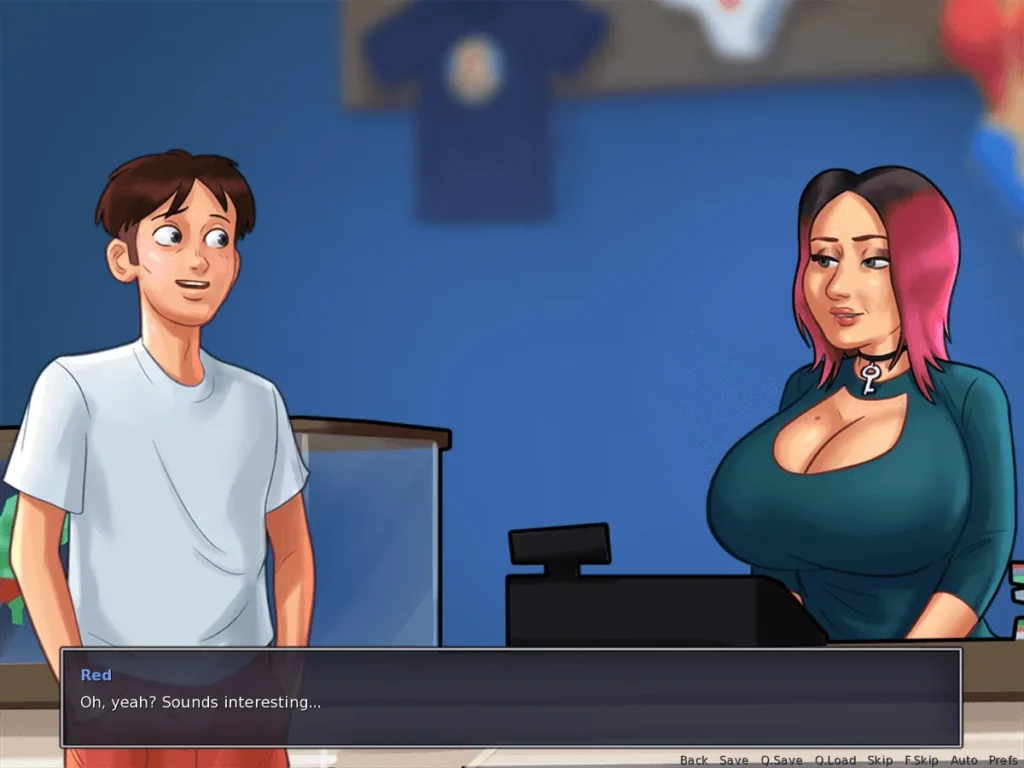
- Character Interactions: With over 65 characters, from neighbors and classmates to teachers and local business owners, everyone has a story. Building character routes and relationships is a central pleasure.
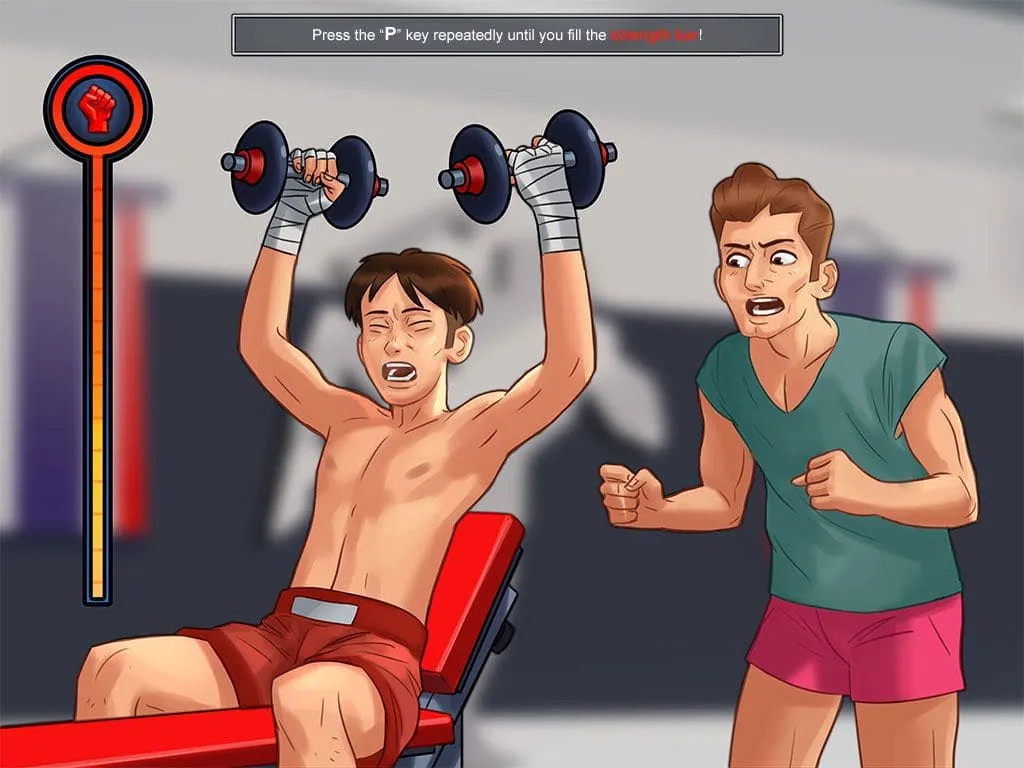
- Attribute Progression: Your character has skills like Strength, Intelligence, and Charisma. Improving these through mini-games or study unlocks new dialogue options and story paths.
- Mini-Games: From pizza delivery and fishing to computer hacking and arcade games, over 20 mini-games break up the narrative and are often tied to earning money or progressing quests.
- Day-Night Cycle: The Summertime Saga day-night cycle is a crucial strategic layer. Time advances with every action, and most characters have specific schedules. Miss someone during the day? Try their home at night. You must also return home to sleep to replenish energy and start the next day.
| Gameplay Aspect | How It Works | Impact on Experience |
|---|---|---|
| Open-World Map | Click to move between 30+ static screen locations. Characters move on schedules. | Creates a sense of a living world and player-driven exploration. |
| Visual Novel Dialogue | Upon interaction, the game presents narrative text, character sprites, and player choices. | Drives the story and deepens emotional connection to characters. |
| Resource Management | Manage Energy, Money, and Time each day. Sleep to reset Energy and advance the calendar. | Adds strategic depth and forces players to prioritize daily goals. |
| Skill & Stat System | Improve Stats (Strength, Intellect, etc.) through repeated actions or mini-games. | Gates certain story content and provides a sense of character growth. |
| Quest Journal | Tracks active and completed storylines for the main plot and character routes. | Helps players navigate the non-linear world without getting lost. |
### The Main Plot: Mystery, Debt, and Personal Growth
The Summertime Saga story is the engine that drives everything forward. It begins with a heavy premise but quickly reveals a heart of gold beneath its adult-oriented exterior. You’re not just a teen chasing romance; you’re a young man thrust into adulthood overnight. The looming debt to the sinister “Mr. Johnson” and his mob is a constant shadow, providing urgent motivation to raise cash through any means necessary—be it odd jobs, gambling, or entrepreneurial ventures.
But the plot thickens far beyond finances. Your father’s death is shrouded in mystery, with strange clues and enigmatic figures suggesting it was no accident. 👁️🗨️ Investigating this becomes a compelling detective thread woven throughout your daily life. This duality is what makes the Summertime Saga story so engaging. One moment you’re stressing about a biology test with your friend Eve, the next you’re following a cryptic lead to a shady downtown warehouse.
Alongside this core mystery are the relatable, personal goals. You need money for college tuition, pushing you into the workforce. And yes, you need a date for the prom—a classic teen milestone that serves as a fantastic framework for pursuing various character routes and relationships. Whether you want to help your best friend Jenny with her family troubles, assist the enigmatic scientist Judith with her research, or get to know the enigmatic new girl next door, each connection feels meaningful and often ties back to the larger world.
Tip from a Veteran Player: Don’t try to do everything at once! The Summertime Saga story is designed to be savored. On my first run, I burned out trying to max out every stat and talk to everyone daily. Focus on one or two character storylines and a main quest thread per playthrough. The game rewards focused attention, and there’s always New Game+ to explore other paths!
This blend of high-stakes mystery and slice-of-life drama ensures the Summertime Saga gameplay never feels monotonous. The adult content is present, but it’s almost always an optional outcome of deepening a relationship, not the sole purpose. It’s a game about connection, growth, and unraveling secrets, with the player’s choices shaping the tone and pace of their unique journey.
### Open-World Exploration vs. Linear Progression
This is where Summertime Saga truly separates itself from the pack of traditional visual novel adventures. Most games in the genre are like reading a “choose-your-own-adventure” book: you move from page to page (scene to scene) in a mostly set order. Summertime Saga hands you the entire book at once and says, “Explore the chapters in whatever order you like.” 📖✨
The open-world dating simulation aspect grants unparalleled player agency. After the short tutorial, you are cut loose. The entire map is open from the get-go. This freedom is exhilarating but can be daunting. I remember standing outside my house on Day 2, overwhelmed by possibilities. Do I go to school? The bank? The beach? This isn’t a flaw; it’s the point. Your story is literally defined by where you choose to go and who you choose to see.
Let’s contrast it with a linear model:
* Linear Visual Novel: Story Beat A -> Choice 1 or 2 -> Story Beat B -> Choice 3 or 4 -> Conclusion.
* Summertime Saga’s Open World: Wake up. Check journal. You have 5 active quests. You can: 1) Go to the library to study for the science test (boosting Intellect for a future story check), 2) Visit the cafe to work your shift and earn $50, 3) Head to the park to meet Roxxy for a story scene, 4) Go fishing to get a specific item for Debbie’s quest, or 5) Simply explore a new part of town you’ve never visited. The day progresses based on your priorities.
The main storyline itself is non-linear. While key plot points must be completed in a general sequence (you can’t solve the mystery before getting certain clues), how you prepare for them is entirely up to you. The side content—the vast majority of the character routes and relationships—is almost entirely flexible. You can pursue romance with your landlady while also helping the police chief with her investigation, all while taking computer classes at the community center.
This structure is powered by the essential Summertime Saga day-night cycle. Time is your most precious resource. Every action consumes it, and the clock pushes you forward. This creates natural rhythm and stakes. You can’t be everywhere at once, so you learn the schedules of characters you care about. The waitress you like works evenings. The teacher you need to see has office hours in the afternoon. This mechanic transforms the town from a static backdrop into a believable ecosystem.
It’s worth noting that this incredible depth is a work in progress. The game is developed by “DarkCookie” and funded through Patreon, with updates adding new locations, characters, and story chapters regularly. This model has allowed the game to grow organically into the rich experience it is today, with a passionate community helping shape its development.
In the end, Summertime Saga succeeds because it trusts the player. It gives you a world, a compelling set of problems, and a toolkit of skills and relationships, then steps back. Whether you want to be a diligent student, a savvy entrepreneur, a fearless detective, or a charismatic socialite, the Summertime Saga gameplay provides the canvas. It’s a testament to how powerful an adult dating sim game can be when it embraces true player freedom, wrapped in a charming, engaging, and endlessly curious Summertime Saga story.
Summertime Saga represents a unique entry in the adult gaming landscape, combining engaging storytelling with meaningful player agency and character development. The game’s open-world structure, extensive character roster of over 65 individuals, and multiple relationship routes provide hundreds of hours of content for players seeking a narrative-driven experience. Whether you prefer the content-complete Stable version or the technically superior Preview version with its updated engine and enhanced graphics, both offer distinct advantages depending on your priorities. The attribute progression system and mini-games create a satisfying gameplay loop that extends beyond simple visual novel mechanics, while the day-night cycle adds strategic depth to planning your activities. With regular updates funded by a dedicated Patreon community and an active wiki providing comprehensive guides, Summertime Saga continues to evolve as a living project. If you’re interested in exploring a complex narrative with branching character routes and meaningful choices, this game offers substantial value for players seeking an immersive adult-oriented dating simulation experience.