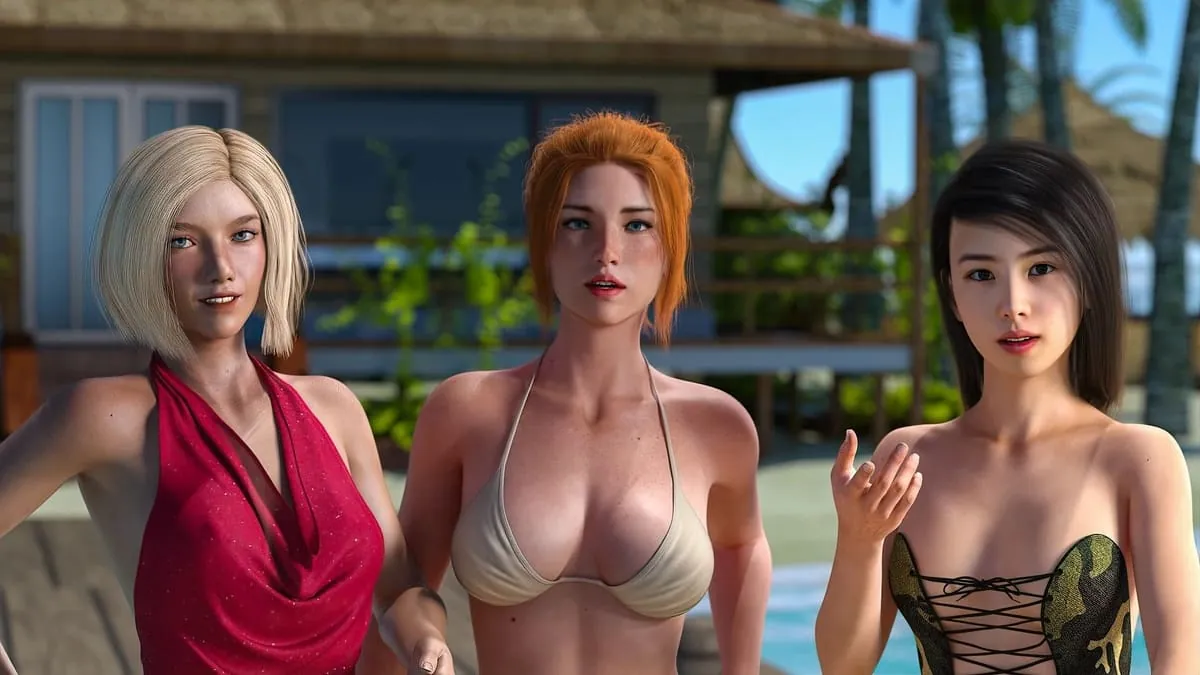
Aperture
Play Aperture
Aperture Screenshots





Aperture review
A player-focused, practical walkthrough and analysis of the ‘Aperture’ game experience
Aperture is a single game I know well and in this article I walk readers through everything they need to know to play, enjoy, and evaluate it. Right away I’ll cover what the game is, how it plays, where to install it, and the most important safety and content considerations for players. I wrote this after playing multiple sessions and talking with other players so you’ll get hands-on tips, real examples, and a clear sense of whether Aperture is a good fit for you.
What is Aperture? Origins, premise, and tone
So, you’ve heard the name whispered in forums, seen a few captivating screenshots, and now you’re wondering: what exactly is Aperture? 🎮 If you’re picturing another blockbuster title from a giant studio, prepare for a delightful surprise. Aperture is something different—a passion project that crawled out of the digital underground to become a cult phenomenon. I remember my first encounter vividly: it was a rainy Sunday, I was scrolling through an indie game hub, and the stark, beautiful key art stopped me cold. I downloaded it on a whim, and three hours later, I realized I hadn’t moved from my chair. This wasn’t just a game; it was an experience, hand-crafted and dripping with intention. Let’s pull back the curtain and explore the origins, world, and unique feel of this remarkable title.
Development History and Creators
The Aperture development history is a classic indie success story, but with a twist of profound community collaboration. 🌱 The game wasn’t born in a corporate boardroom but in the shared digital workspace of a tiny, three-person team operating under the name “Lensflare Studios.” For years, this project was their nights-and-weekends labor of love, developed using a modular, accessible framework that allowed for incredible flexibility.
The core vision came from lead designer and writer Maya Vance, a former architect who wanted to explore themes of perception, memory, and structural decay. She was joined by programmer Leo Chen, who built the game’s now-legendary dynamic lighting system, and composer Anya Petrova, whose haunting, adaptive score is half the reason the atmosphere sinks into your bones. For the first two years, Aperture was a private prototype, shown only to a close circle of friends. The big shift came when they released a public “Proof of Concept” demo during a major online game festival.
The community reaction was immediate and electric. Players weren’t just excited; they became co-creators. This brings us to a pivotal case study: The Echoes Update. Initially, the game’s narrative was linear. But players in the forums began sharing wildly intricate theories about the lore hidden in environmental details—theories so good that the developers incorporated them. The “Echoes Update” formally introduced a branching narrative path based on subtle player actions many didn’t even know they were performing, a feature directly inspired by player speculation. This patch didn’t just add content; it fundamentally changed the game’s direction from a fixed story to a reactive, personal journey. It cemented Aperture’s identity as a dialogue between creators and players.
This organic, responsive development history means the game feels uniquely personal. Every mechanic, from the way you examine objects to how the soundscape shifts, feels deliberately chosen, not focus-grouped. You’re playing a world built with a specific artistic vision, yet flexible enough to embrace the stories its players brought to it.
Setting, Characters, and Narrative Hooks
Now, let’s step into the world itself. The Aperture premise and setting are where the game truly separates itself from the pack. You are not a hero. You are not the chosen one. You play as a Restorer, a silent protagonist who enters the decaying, monumental structure known simply as “The Archive.” Your objective is simple on paper: navigate its vast, shifting halls to recover and stabilize fragile memory crystals. In practice, it becomes a deeply personal excavation.
The setting is a character in itself. The Archive is a breathtaking, impossible place—a grand fusion of gothic cathedral, brutalist library, and biological ruin. Stone halls give way to crystalline growths; silent reading rooms overlook vertigo-inducing voids. It’s a place where the architecture seems to breathe and remember, all rendered with a painterly eye for light and shadow. The Aperture premise and setting masterfully use environmental storytelling. You won’t find long diary entries. Instead, you piece together the story of The Archive’s collapse—and your own purpose—by observing shattered stained-glass images, the wear on a forgotten chair, or the way light falls through a collapsed ceiling.
This leads us to the Aperture characters. While you may be largely alone, the Archive is populated by “Echoes”—faint, spectral residues of past inhabitants. These aren’t traditional NPCs with quest markers. They are moments frozen in time, looping fragments of emotion and action. You might witness an Echo of two scholars arguing passionately, their forms translucent and their voices layered with static. Another might simply be a figure gazing out a window, repeating a sigh. You cannot interact with them directly, but by observing and sometimes using your tools to “focus” on them, you clarify their memories, which in turn alters the environment around you, opening new paths.
The core narrative hook is genius in its simplicity: You change the world by learning to see it properly. Your progression isn’t tied to a skill tree but to your growing understanding. A wall that seemed solid might reveal a hidden passage once you’ve witnessed the specific Echo that longed to escape through it. The Aperture characters, these fleeting Echoes, are your guides, your puzzles, and your emotional anchor in the immense solitude of The Archive.
I’ll never forget my first major “aha!” moment with this system. Early on, I was stuck in a circular gallery. I’d seen an Echo of a custodian polishing a blank pedestal, but thought nothing of it. After an hour of frustration, I replayed the scene and noticed the exact angle of their gaze—it wasn’t at the pedestal, but at a specific crack in the far wall. Using my focus tool there caused the entire room to rotate, revealing a new wing. The game had taught me, without a single line of text, that everything here is a clue.
Content, Rating, and Tone — What to Expect
Before you dive into The Archive, it’s crucial to understand what you’re stepping into. The Aperture tone and rating are consistent but distinct. This is a contemplative, often melancholic experience, punctuated by moments of awe and rare tension.
First and foremost, let’s address the Aperture content warning. This game deals with mature themes in a thoughtful, non-gratuitous way, but they are present and central to the experience. Players should be prepared for:
* Themes of Loss and Memory: The core narrative explores decay, forgotten history, and personal grief.
* Psychological Atmosphere: The game creates a strong sense of isolation and occasional surreal, dream-like disorientation that can feel unsettling.
* Mild Peril: There are sequences involving navigating precarious architectural collapses and avoiding zones of “memory instability,” which present a fail-state but not graphic violence.
* Abstract Depictions of Passing: Some Echoes show figures in their final moments, represented through symbolic, non-literal visuals (e.g., fading into light or becoming part of the stonework).
There is no graphic violence, sexual content, or strong language. The game carries an “M for Mature” rating from official bodies, primarily for its complex psychological themes. However, it’s best described as a “thoughtful Mature,” akin to a poignant novel or art film. Community moderation on forums is robust, focusing on supporting players through the emotional journey and sharing lore discoveries.
| Developer | Initial Release Date | Platforms | Official Rating |
|---|---|---|---|
| Lensflare Studios | October 2022 | PC, Mac, PlayStation 5, Xbox Series X/S | M (Mature) |
The overall tone is one of solemn beauty. It’s a quiet game. You will spend time simply walking, looking, and listening. Petrova’s score is a masterpiece of subtlety, often receding into near-silence, making the creak of stone and the whisper of distant echoes all the more powerful. The Aperture tone and rating go hand-in-hand to create an experience that is less about excitement and more about profound immersion and introspection. It’s a game to be felt as much as played.
So, how does this Aperture game background ultimately shape what you hold in your hands? Every choice reflects its origins. The intricate, reactive environments are possible because a small team built a system they could lovingly tweak for years. The profound silence and emphasis on observation exist because they didn’t need to satisfy a publisher’s demand for constant action. The deeply integrated community ideas are there because the developers listened. Playing Aperture is to experience a game that is whole, coherent, and fiercely dedicated to its own unique vision—a vision that began in a small digital room and grew through the care of its makers and its players. It’s not just a pastime; it’s an invitation to see the world, and the stories buried within it, a little differently.
This guide collected practical, experience-based information about the single game Aperture: its origins and tone, how it plays, installation and safety steps, hands-on strategies, and where to find ongoing community support. I’ve included concrete setup tips, troubleshooting advice, and short player stories to make the guidance actionable. If you want, I can expand any chapter into a full-length how-to or produce a step-by-step walkthrough tailored to your platform and playstyle—tell me which chapter to expand first.